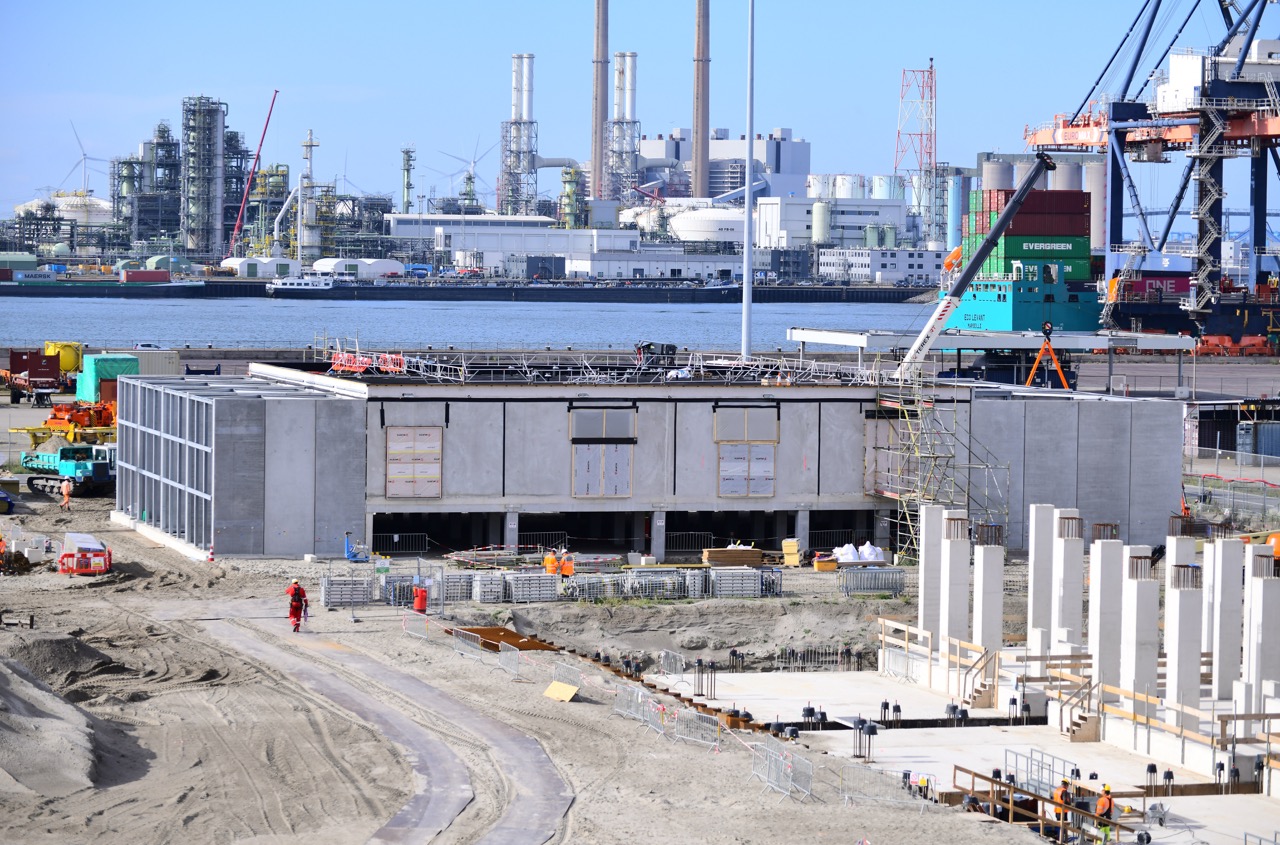
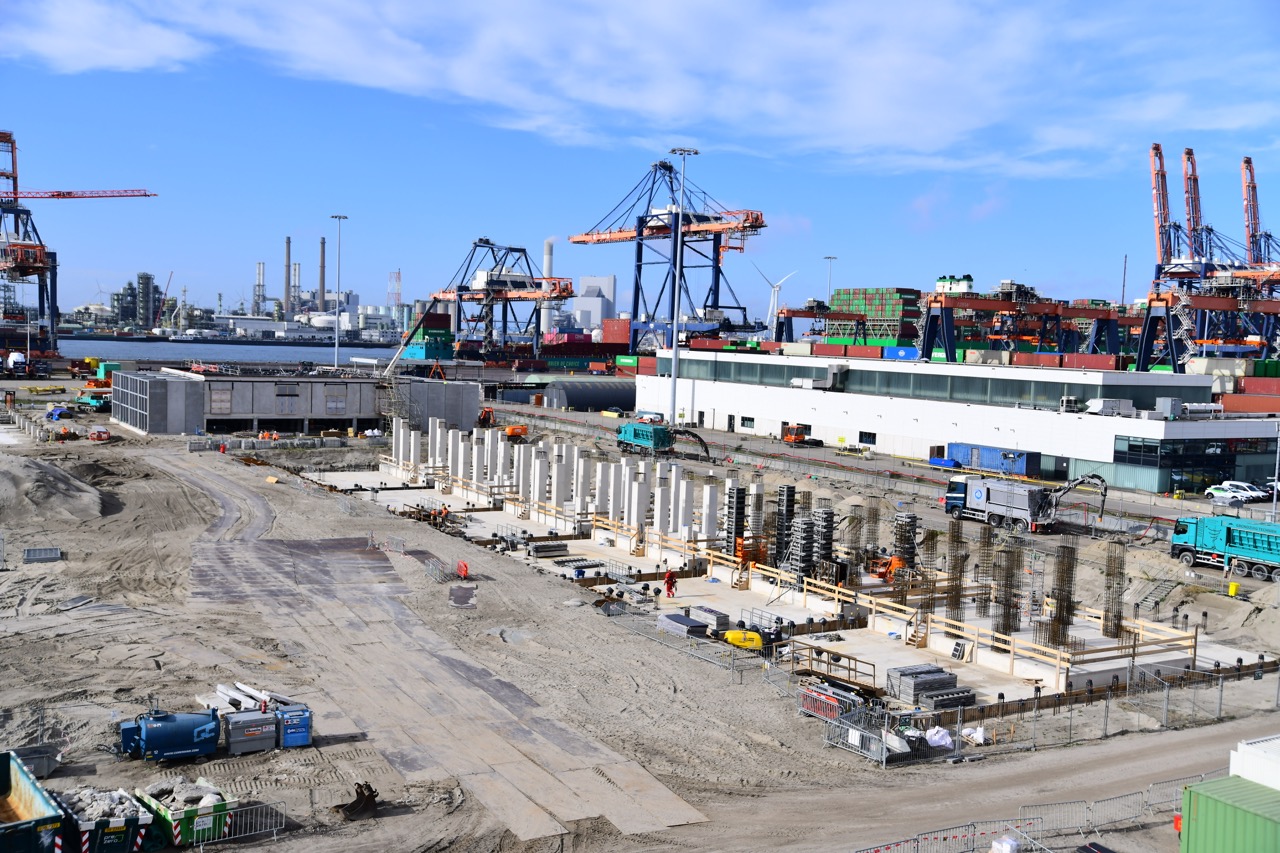
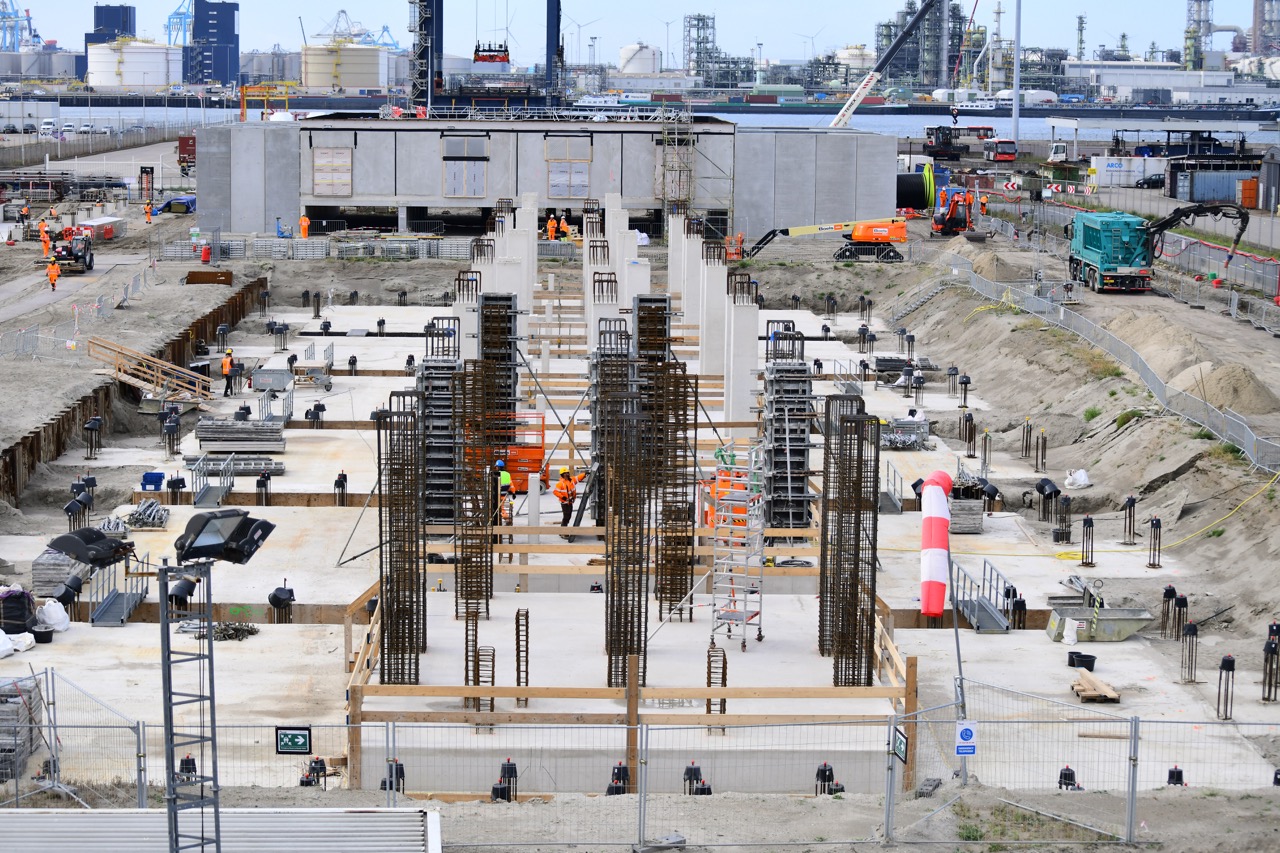
The Porthos project is a large-scale CO2 storage project in the Rotterdam port area and the North Sea. Companies in the port capture their CO2 and deliver it to a pipeline of more than thirty kilometres that runs to the Maasvlakte. There you will find the compressor station, the heart of the installation.
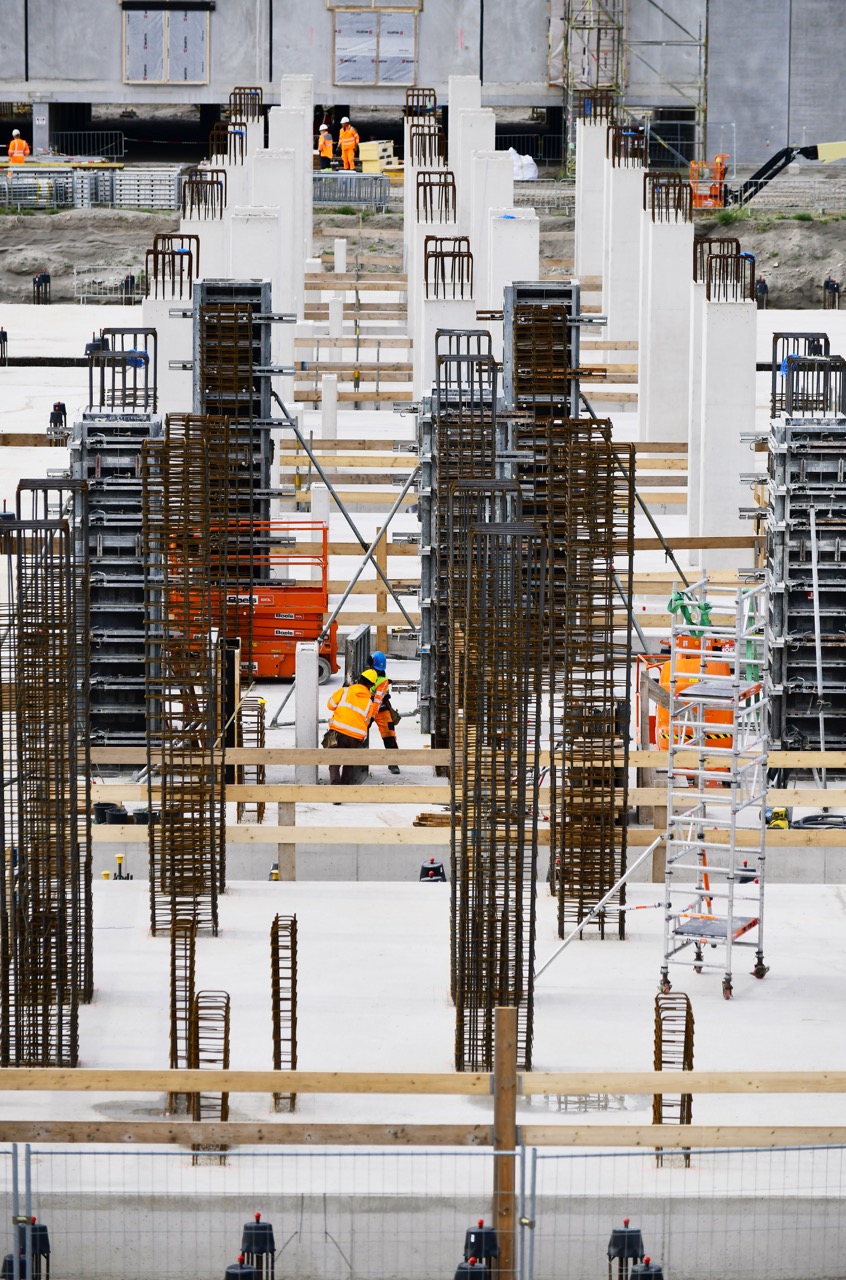
The site, covering approximately two hectares, consists of several specialised buildings. The electrical building supplies the station with power, while the cooling water pump building houses the pumps that cool the compressors. In the compressor building, the CO2 is pressurised by three compressors to a maximum of 130 bar for further transport. Aratis is supporting the development of both the compressor station and the cooling water pump building.
The CO2 is transported from the coast to a platform in the North Sea, approximately twenty kilometres off the coast, via an undersea pipeline. This platform is being converted for reuse, to inject the CO2 into depleted gas fields. The gas fields are located in a sealed reservoir of porous sandstone, three to four kilometres below the North Sea. Porthos can store approximately 37 Mtonnes of CO2 in the reservoirs, or about 2.5 Mtonnes of CO2 per year for 15 years.
Once the Porthos project is operational, CO2 transport will take place in three phases. The first phase is a free-flow phase in which the CO2 flows into the reservoir using a low initial pressure. This is followed by gas phase injection using compressors up to 75 barg. Finally, there will be a switch to dense phase injection consisting of colder CO2 and pressures of up to 135 barg.
With this approach, Porthos can store approximately 37 Mtonnes of CO₂, or about 2.5 Mtonnes of CO₂ per year for 15 years, thus making an important contribution to reducing industrial emissions.
Images: Danny Cornelissen